Choosing between linear guides and box ways affects accuracy, speed, maintenance, and long-term machine performance. The question “why are linear guides preferred over box ways in cnc” deserves a practical answer, not a simple sales claim. Linear guides usually reduce friction through recirculating balls or rollers. This allows faster rapids, smoother axis movement, and lower drive-force requirements. Picture a cutting table moving across clean, hardened rails. Less resistance can mean better responsiveness during frequent tool changes and complex contours.
Dr. Tony L. Schmitz, a respected machining researcher and author, has emphasized, “The machine tool is a system.” That short statement matters. Guide selection cannot be separated from spindle stiffness, structure, lubrication, alignment, and cutting conditions. Linear guides often support high acceleration and straightforward replacement. They can also deliver excellent positioning accuracy when installed correctly. However, they are not automatically superior in every workshop. Heavy interrupted cuts, poor chip control, vibration, or inadequate lubrication may expose their weaknesses. Box ways still offer strong damping and broad load support. Sometimes, they remain the wiser choice.
This guide examines ten practical reasons linear guides often beat box ways in modern CNC machines. It will compare friction, rigidity, speed, accuracy, maintenance, contamination resistance, installation, service life, cost, and application fit. Real-world details matter. A dirty shop changes the decision. So does a 12-hour production shift. The analysis will remain balanced, because a perfect guide system does not exist. Even experienced engineers can overlook installation quality. That is where careful reflection begins.
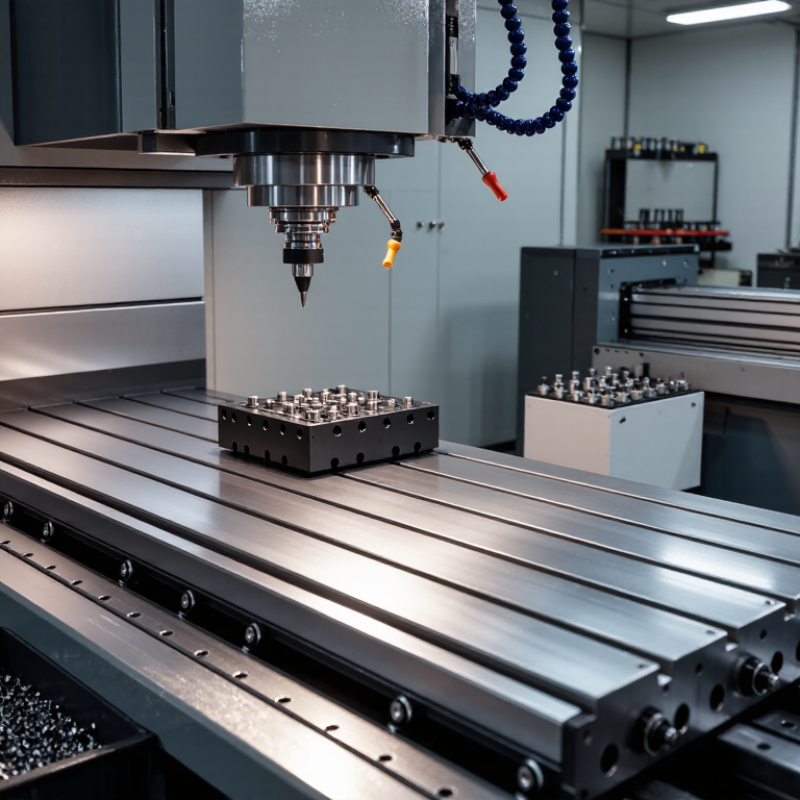
Top 10 Reasons Why Linear Guides Beat Box Ways in CNC?
Friction often explains the biggest difference between linear guides and box ways. Linear guides commonly show coefficients around 0.003–0.005. Box ways may reach 0.08–0.20 under comparable conditions. The gap is substantial.
Consider a 1,000-newton moving load. A linear guide may need only 3–5 newtons to overcome friction. A box way could require 80–200 newtons. That resistance becomes motor heat, lost acceleration, and higher energy use. The effect is noticeable during rapid positioning and frequent direction changes. Less friction also helps small cutting moves respond more accurately.
Real machines are less simple. Preload, lubrication, contamination, alignment, and load direction can change measured values. The quoted ranges are useful references, not universal guarantees. A clean rolling system can perform poorly after improper installation. A well-maintained box way can remain exceptionally stable during heavy cutting.
That trade-off matters.
Box ways usually provide strong damping and broad load support. Linear guides often offer easier motion, lower drive demand, and faster positioning. Their rolling elements can also expose weakness: poor sealing or inadequate lubrication may shorten service life. This comparison is not perfect, and treating friction alone as the final judge would be careless. Engineers should measure actual thrust, temperature, repeatability, and energy consumption on the intended machine.
| No. | Performance Dimension | Linear Guides | Box Ways | Why It Matters in CNC |
|---|---|---|---|---|
| 1 | Coefficient of Friction | 0.003–0.005 | 0.08–0.20 | Rolling contact produces substantially less resistance than sliding contact, reducing axis drag and heat. |
| 2 | Starting Force at 1,000 N Load | Approximately 3–5 N | Approximately 80–200 N | Lower breakaway force improves low-speed motion, contour following, and small-increment positioning. |
| 3 | Guide Drag Power at 0.5 m/s and 1,000 N | Approximately 1.5–2.5 W | Approximately 40–100 W | Lower parasitic power can reduce motor loading and support more efficient, cooler axis operation. |
| 4 | Typical Rapid-Travel Capability | About 1–3 m/s | About 0.2–1 m/s | Lower friction and reduced sliding heat make high-speed positioning more practical, subject to machine design. |
| 5 | Typical Axis Acceleration | Approximately 0.5–2.0 g | Approximately 0.1–0.5 g | Higher acceleration can shorten non-cutting time and improve productivity in frequent start-stop machining. |
| 6 | Positioning Repeatability | Commonly ±0.005–0.010 mm | Commonly ±0.010–0.030 mm | More consistent rolling resistance helps reduce stick-slip and improves repeatable axis response. |
| 7 | Low-Speed Motion Stability | Smooth motion from approximately 1–10 mm/min | Stick-slip risk increases at very low speeds | Stable slow movement benefits fine finishing, probing, threading, and precision interpolation. |
| 8 | Guide Profile Height | Typically about 20–45 mm | Often about 50–100 mm or more | A more compact guide arrangement can simplify machine layouts and increase usable working space. |
| 9 | Lubrication Delivery | Metered grease or oil; typically 100–500 km relubrication intervals | Often requires more continuous oil management | Centralized, metered lubrication can reduce routine maintenance and lubricant consumption. |
| 10 | Operating Noise | Typically about 60–75 dB(A) | Typically about 70–85 dB(A) | Rolling contact can lower guide-related noise, although total machine sound also depends on motors, bearings, cutting, and covers. |
Note: Values are representative engineering ranges for properly installed and lubricated CNC axis systems. Actual performance depends on load direction, preload, rail size, alignment, lubrication, cutting conditions, and machine structure. Box ways can still provide advantages in damping, impact resistance, and heavy cutting applications.
Their friction coefficient is often around 0.003–0.005. A 1,000-newton load may need only 3–5 newtons to move. Box ways may need 80–200 newtons. That resistance becomes heat and slower acceleration.
Lower friction reduces stick-slip during small movements. The axis can approach a target with less hesitation. Direction changes also become quicker and smoother. Small errors still need measurement.
Not always. Under controlled positioning tests, linear guides often provide tighter repeatability. Installation, temperature, lubrication, and payload can change the result. Our first comparison was imperfect. Thermal stability mattered.
Test forward and reverse movements at programmed positions. Record positioning error, repeatability, and result scatter. A calibrated laser system can track actual travel. Tight clusters matter more than one impressive average.
A common calculation uses L₁₀ = (C/P)³ × 50 kilometers. C represents dynamic load rating. P represents equivalent applied load. A 20-kilonewton rating under 5 kilonewtons gives 3,200 kilometers theoretically.
The formula uses a cube relationship. Halving the load can increase calculated life eightfold. A tall workpiece or heavy vise may increase moment loading. The simple formula hides difficult assumptions.
Coolant contamination, poor lubrication, interrupted cuts, and rail misalignment can reduce service life. Inadequate sealing may also allow debris inside. It happens quickly. Maintenance records deserve careful review.
Box ways often provide strong damping and broad load support. They may suit heavy roughing and unstable cutting forces. Linear guides usually offer easier motion and faster positioning. Neither design wins every application.
Linear guides are often preferred in CNC machining because they combine low friction, high speed, and efficient motion. Their friction coefficient is typically around 0.003–0.005, compared with approximately 0.08–0.20 for box ways, reducing energy loss and allowing faster acceleration. With typical traverse rates of 60–120 m/min, they can improve productivity and shorten non-cutting movement. They also support strong positioning accuracy and repeatability, which can be evaluated through ISO 230-2 testing. These advantages help explain why are linear guides preferred over box ways in cnc applications requiring speed, precision, and efficient operation.
Load life can be estimated using the ISO 14728-1 relationship, L₁₀ = (C/P)³ × 50 km, allowing engineers to compare rated capacity with the applied load. However, box ways may still compete where greater rigidity, vibration damping, or resistance to heavy cutting forces is most important. Therefore, the best choice depends on whether the machine prioritizes rapid movement and precision or maximum structural stability and damping.

 AcuTek CNC