Milling machines can remove metal quickly, but they can also create flying chips, sharp edges, noise, and unexpected movement. A safe workshop depends on practical equipment, trained operators, and disciplined procedures. This guide examines China’s top 10 required milling machine safety equipment, focusing on protection that workers can see, use, and maintain every day.
A common question is: what safety equipment is required to operate a milling machine? The answer usually includes safety glasses or face shields, hearing protection, safety footwear, close-fitting workwear, emergency-stop devices, machine guards, chip shields, suitable gloves for specific handling tasks, lockout equipment, and reliable ventilation. Each item addresses a different hazard. For example, a clear shield can stop hot chips from reaching the operator’s face, while a well-positioned guard can prevent contact with rotating tooling.
However, equipment alone cannot make milling safe. Operators need hands-on instruction, pre-start inspections, and clear maintenance records. Experienced supervisors should check whether guards remain secure and whether emergency controls work under realistic conditions. Protective equipment must also fit the user and match the machine’s operation. Loose clothing and gloves near rotating cutters can increase risk, so workplace procedures require careful judgment. No list is perfect. Shop layouts, materials, tooling, and local safety requirements can change the correct solution. This article therefore offers a practical, evidence-informed starting point, not a substitute for qualified risk assessment or manufacturer guidance.
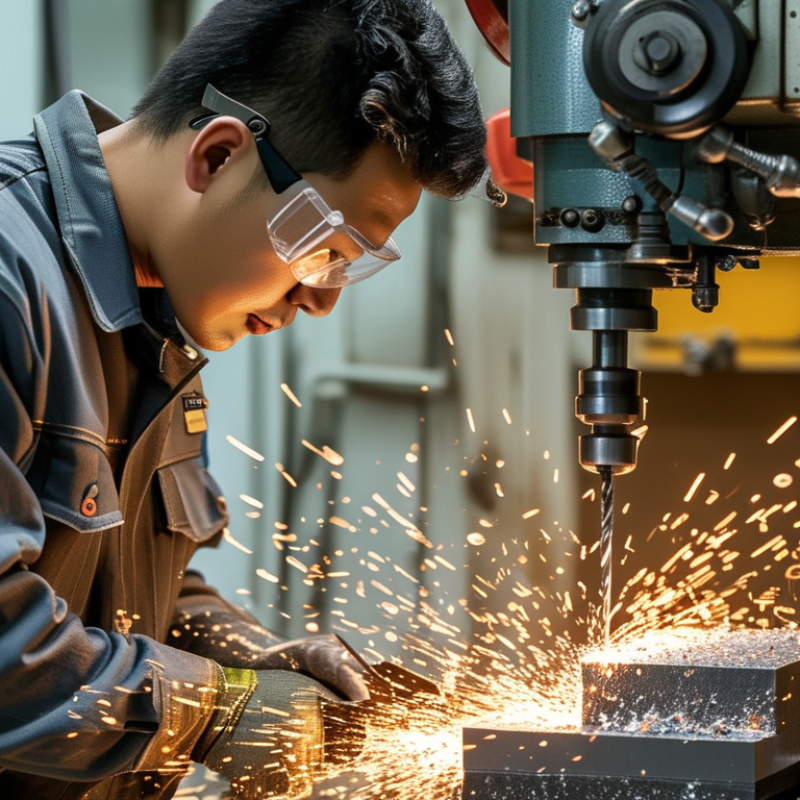
China’s top milling machine safety equipment should begin with purpose, not appearance. Each item must control a specific hazard: rotating cutters, flying chips, sharp workpieces, noise, coolant, and unexpected startup. In daily workshop use, eye protection, machine guards, chip shields, hearing protection, and safety footwear form the basic barrier. A clearly reachable emergency stop matters too. It should stop motion quickly without forcing the operator to reach across the table.
The scope extends beyond the machine itself. A reliable setup may include lockout equipment, suitable lighting, coolant-resistant gloves for handling parts, and a maintained fire extinguisher nearby. Gloves should not be worn near exposed rotating tools. That detail is often missed. Safety equipment must suit the task, material, spindle speed, and operator’s position. A guard that blocks the workpiece view may encourage unsafe adjustments. A transparent, impact-resistant shield usually offers better visibility, but it still needs regular inspection.
Selection should follow a documented hazard assessment and applicable workplace standards. Check impact resistance, fit, adjustment range, cleaning needs, and replacement intervals. Equipment should remain effective during long shifts, not only during an inspection. In my experience, workers accept protection more readily when it is comfortable and easy to maintain. A rushed purchase can create false confidence. Recheck the setup after changing cutters, coolant, fixtures, or production volume. Small changes can expose hazards that the original assessment never considered.
A safe milling area begins with equipment that controls real workshop hazards. Fixed or interlocked machine guards protect operators from rotating cutters and flying fragments. Transparent chip shields add another barrier during rough cutting. Safety glasses or face shields protect eyes from sharp metal chips and coolant spray. Hearing protection helps when several machines operate in the same enclosed room. Safety footwear with protective toes and slip-resistant soles supports stable movement around oily floors.
Emergency stop buttons must remain visible and reachable from the operator’s normal position. Lockout/tagout kits help isolate electrical, pneumatic, and hydraulic energy during maintenance. Coolant mist extractors improve air quality, especially during long production runs. Suitable fire extinguishers should be accessible, inspected, and matched to possible electrical or metal-related fires. Clearly stocked first-aid kits provide immediate support for minor cuts and eye irritation.
In practical inspections, equipment placement matters as much as equipment selection. A guard can exist, yet still be poorly adjusted. An emergency button can be present, yet blocked by a tool cart. Workers should check shields, cables, extraction airflow, and floor conditions before each shift. Cut-resistant gloves may help during material handling, but they should not be worn near rotating parts. This detail is often overlooked. Chinese workshops should also align their procedures with applicable workplace safety requirements and provide documented training. Safety improves through repeated checks, honest reporting, and small corrections.
China Top 10 Required Milling Machine Safety Equipment: How to Choose Guards, Interlocks, and Emergency Stop Systems
A milling machine needs a rigid guard around cutters, belts, and rotating shafts. Select guards that block chips without hiding the work area. ISO 14120 requires guards to resist foreseeable impact, movement, and removal. Fixed guards suit routine operations. Hinged guards work better where frequent access is unavoidable. Check the hinge after cleaning. Small gaps can become serious hazards.
Interlocks should stop hazardous motion when a door opens. Choose a system with monitored contacts and fault detection. ISO 13849-1:2023 supports performance-based safety design, not simple switch installation. The interlock must prevent automatic restart after closure. Test it during every scheduled inspection. This is where many installations become imperfect. A carefully selected component cannot correct poor wiring or bypassed controls. The U.S. Bureau of Labor Statistics recorded 5,283 fatal occupational injuries in 2023, showing why control reliability matters.
Emergency stop systems need accessible, clearly marked actuators near operator positions and loading points. The button should stop dangerous motion quickly, but it must not replace energy isolation during maintenance. OSHA 29 CFR 1910.212 requires machine guarding wherever hazards exist at the point of operation. Use pull-cords for long tables and mushroom buttons for compact machines. Label reset locations clearly. A practical trial with gloves, coolant, and normal lighting often reveals weaknesses that design reviews miss.
| No. | Safety Equipment | Primary Hazard Controlled | Recommended Function and Design | Selection Criteria | Inspection and Verification | Typical Priority |
|---|---|---|---|---|---|---|
| 1 | Spindle and Cutter Guard | Contact with rotating cutters, ejected chips, and broken tool fragments. | Transparent or impact-resistant fixed or adjustable enclosure around the spindle and cutting zone. The guard should allow sufficient visibility while preventing access to hazardous rotating parts. | Choose a rigid design with adequate impact resistance, easy cleaning access, and openings sized to prevent hand access. The guard must not interfere with workholding or tool changes. | Check for cracks, loose fasteners, damaged hinges, and excessive openings before each shift. Confirm that the guard remains stable during operation. | High |
| 2 | Sliding Table or Enclosure Guard | Access to the work envelope during milling, including exposure to moving tables, fixtures, and chips. | Physical enclosure or sliding barrier that separates the operator from the cutting area while providing access for loading and unloading. | Select a guard with sufficient travel clearance, visibility, and ergonomic access. It should be compatible with the machine's table movement and workpiece dimensions. | Verify that panels, tracks, handles, and mounting points are secure. Ensure the guard closes fully and does not create pinch points. | High |
| 3 | Guard Door Safety Interlock | Machine operation with an access door or barrier open. | Interlocking device that prevents hazardous motion when the guard is open and prevents opening while dangerous motion or stored energy remains. | Use a monitored interlock suitable for the machine's control system. Where risk assessment requires it, select a guard-locking interlock that keeps the door locked until motion has stopped. | Test the interlock according to the manufacturer's procedure. Opening the guard during a test must initiate the intended stop function, and bypassing the device must not be easy. | High |
| 4 | Emergency Stop System | Failure to stop hazardous motion quickly during an abnormal or dangerous event. | Clearly identified red emergency-stop actuator with a contrasting background, positioned within easy reach of the operator and other exposed personnel. | Provide emergency stops at the main operator station and other necessary access points. The system should require deliberate resetting and must not automatically restart the machine. | Test each actuator at planned intervals. Confirm that the emergency stop removes or controls hazardous energy as intended and that reset does not initiate automatic operation. | High |
| 5 | Spindle Brake or Safe Stopping Function | Continued rotation of the spindle after a stop command, creating a hazard during access or tool change. | Dynamic braking, controlled stopping, or a safety-rated stop function appropriate to the machine's spindle and drive system. | Consider spindle speed, tool mass, stopping time, thermal load, and whether the braking method can safely control stored rotational energy. | Measure or verify stopping performance during commissioning and after major maintenance. Investigate abnormal stopping noise, delay, or brake wear. | High |
| 6 | Workholding and Fixture Restraint | Workpiece movement, pull-out, rotation, or ejection during cutting. | Secure vise, chuck, clamps, fixtures, and locating devices designed for the workpiece geometry and cutting forces. | Check clamping capacity, jaw condition, fixture rigidity, access for tool clearance, and compatibility with the table and T-slots. Avoid improvised or damaged clamps. | Inspect clamping surfaces, fasteners, jaws, and locating features. Confirm that the workpiece is seated correctly and that the fixture remains secure during a test cycle. | High |
| 7 | Chip and Coolant Containment System | Flying chips, hot swarf, coolant splash, slips, and contamination of nearby controls. | Enclosed chip panels, splash guards, chip trays, drainage, and suitable coolant management around the machining zone. | Choose materials resistant to impact, coolant, and corrosion. Provide adequate drainage and access for safe chip removal without reaching into the cutting area. | Remove accumulated chips safely, inspect panels for damage, and check drains, pumps, hoses, and coolant concentration according to the machine procedure. | Medium |
| 8 | Local Exhaust or Mist-Collection System | Exposure to airborne coolant mist, metal dust, and machining particles. | Source-capture extraction or a properly designed mist collector connected to the enclosure or cutting area. | Size the system for the enclosure volume, process type, coolant, and expected contaminant load. Ensure airflow does not disrupt guarding or create additional fire risks. | Check airflow indicators, filters, ducting, seals, and collection containers. Maintain the system according to the equipment instructions and workplace exposure assessment. | Medium |
| 9 | Lockout/Tagout and Energy-Isolation Hardware | Unexpected startup or release of electrical, pneumatic, hydraulic, gravitational, or rotational energy during servicing. | Lockable disconnects, isolation valves, blocking devices, personal locks, warning tags, and documented isolation procedures. | Identify every energy source and ensure isolation points are accessible, clearly labeled, and capable of accepting authorized locks. Include verification of zero-energy state. | Use a documented shutdown and verification process before maintenance. Periodically audit isolation points, labels, locks, and employee procedures. | High |
| 10 | Safety Control Monitoring and Status Indicators | Undetected failure of guards, interlocks, emergency stops, or control circuits. | Safety relay, safety controller, diagnostic indicator, or equivalent monitoring system that detects relevant faults and prevents hazardous restart. | Select a control architecture based on the machine risk assessment, required stop category, fault tolerance, diagnostic coverage, and applicable local requirements. | Test safety functions using a documented schedule. Record faults, verify reset behavior, and ensure that machine modifications trigger a renewed safety assessment. | High |
Safe milling begins before power reaches the machine. A level floor, adequate lighting, and clear access reduce installation errors. Anchor the machine according to its technical documentation. Verify spindle rotation, table travel, and guarding before loading material. Essential equipment includes fixed guards, an interlocked access cover, emergency-stop controls, and a main disconnect. Use lockout devices during electrical or mechanical servicing. Do not rely on the stop button alone. It may stop motion, but it does not isolate stored energy.
Small oversights matter.
During inspection, operators should check cutters, arbors, fasteners, cables, and coolant lines. Look for cracks, looseness, leaks, and unusual vibration. A transparent chip shield protects the face without hiding the work area. Safety glasses remain necessary. Hearing protection, non-slip footwear, and close-fitting clothing support safer operation. Keep a suitable fire extinguisher nearby, but never obstruct access.
Record each inspection with the date, findings, and corrective action. Paperwork feels slow. It exposes repeated faults.
Maintenance should follow the machine’s service schedule and actual working conditions. Clean chips from ways and enclosures with a brush or approved vacuum, not bare hands. Lubricate specified points, inspect grounding, and test emergency functions regularly. Replace damaged guards immediately.
One weak habit is postponing minor repairs until production ends. That decision can turn a simple adjustment into an unsafe failure.
Supervisors should verify competence, while operators should stop work when conditions change. A checklist helps, but it cannot replace judgment at the machine.
In China, milling machine compliance begins with a documented risk assessment. Required safety equipment may include fixed guards, interlocked covers, emergency-stop devices, chip shields, and suitable eye protection. Electrical controls should follow applicable Chinese requirements, including GB/T 5226.1 where relevant. Machine guarding should also be reviewed against current safety principles, such as GB/T 15706 and GB/T 8196. Always confirm the latest editions and local inspection requirements. Do not rely on a guard alone.
Worker training must be practical, recorded, and repeated after process changes. Operators should learn safe setup, tool changing, workholding, coolant handling, and emergency stopping. Supervisors should check whether employees can identify rotating hazards before production begins. Lockout procedures are essential during cleaning, maintenance, and jam removal. In practice, a checklist may look complete while workers still rush near a moving spindle. That gap needs honest review. Training should include short demonstrations at the machine, not only classroom explanations.
Tips: Keep emergency stops visible and unobstructed. Inspect guards before each shift. Store eye protection beside the machine. Mark safe standing zones on the floor. Review incidents without blaming workers. Small details matter.
: Use fixed guards, chip shields, safety glasses, hearing protection, and non-slip footwear. Keep the emergency stop clearly reachable. Small oversights matter.
It protects the face from flying chips while preserving the operator’s view. Inspect it for cracks, looseness, and clouding before each shift. Visibility can still fail.
No. Avoid gloves near exposed rotating tools because they can catch unexpectedly. Use suitable gloves only when handling stopped parts or coolant-resistant materials.
Confirm stable installation, clear access, adequate lighting, and correct machine anchoring. Check spindle rotation, table travel, guards, cables, cutters, and fasteners. Do not guess.
No. The stop button may halt movement but leave stored energy present. Use lockout equipment and isolate electrical or mechanical energy before servicing.
Inspect guards, shields, cutters, coolant lines, and emergency functions routinely. Check critical items before every shift. Record dates, findings, and corrective actions.
Training should cover setup, workholding, tool changes, coolant handling, and emergency stopping. Workers also need practical demonstrations beside the machine. Classroom training alone may be insufficient.
Base selection on the hazard assessment, material, spindle speed, task, and operator position. Check impact resistance, comfort, adjustment range, cleaning needs, and replacement intervals. A rushed purchase creates false confidence.
This article explains what safety equipment is required to operate a milling machine and how each item helps reduce workplace risks. It covers essential protection such as machine guards, safety interlocks, emergency stop systems, eye and face protection, hearing protection, safety footwear, protective clothing, chip shields, proper lighting, and lockout/tagout devices. The discussion also introduces practical criteria for selecting equipment according to machine design, operating conditions, material type, and worker exposure.
In addition, the article describes safe installation, routine inspection, cleaning, testing, and maintenance of milling machine safety systems. It emphasizes that guards and emergency controls must remain accessible, functional, and correctly positioned. The summary also highlights the importance of worker training, clear operating procedures, hazard awareness, and compliance with applicable Chinese safety standards and workplace requirements. A consistent safety program combining suitable equipment, regular inspections, and responsible operator behavior can significantly improve milling operations.

AcuTek CNC