Top Uses of 430 Stainless Steel Strips for Global Buyers?
In today's global market, the versatility of 430 Stainless Steel Strips is undeniable. These strips have a wide range of applications, making them essential for various industries. Users often appreciate their cost-effectiveness and durability. With a unique blend of chromium, these stainless steel strips offer excellent corrosion resistance.
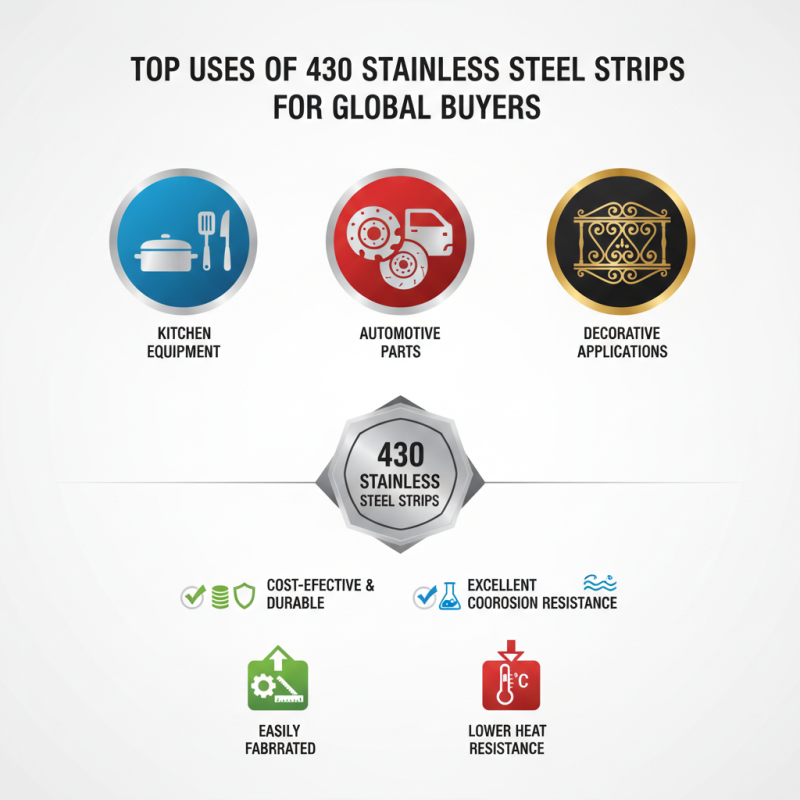
Many manufacturers rely on 430 stainless steel strips for kitchen equipment, automotive parts, and decorative applications. Their magnetic properties provide added advantages in certain sectors. Additionally, these strips are easily fabricated, which appeals to engineers and designers alike. However, users should also consider their limitations, such as lower heat resistance compared to other grades.
As the demand for 430 stainless steel strips grows, understanding their best applications becomes crucial. Buyers must evaluate their specific needs carefully. Mistakes in material selection can lead to increased costs and failures in performance. It is essential to harness both the benefits and the challenges of using 430 stainless steel strips to achieve optimal results.
Understanding 430 Stainless Steel: Properties and Characteristics
430 stainless steel is widely recognized for its unique properties and versatility. This ferritic stainless steel contains around 16-18% chromium, providing excellent resistance to oxidation and corrosion. Its magnetic characteristics make it suitable for various applications, including automotive trim and kitchen equipment. In fact, reports indicate that 430 stainless steel is frequently chosen for its cost-effectiveness compared to austenitic grades.
The mechanical properties of 430 stainless steel are noteworthy. It exhibits good strength and ductility, with a tensile strength range of about 450-600 MPa. This enables it to be easily formed into strips and sheets. Additionally, its ability to withstand temperatures up to 870°C without significant deformation enhances its appeal in industrial sectors. Notably, while it is less prone to pitting than some other stainless steels, users should remain mindful of its limitations in highly corrosive environments.
Recent market trends show a growing demand for 430 stainless steel strips, highlighting their role in eco-friendly manufacturing processes. The recyclability of stainless steel is a key factor driving this trend. However, challenges remain. The industry must address variability in quality and surface finish, which can affect end-use performance. Engaging with reputable suppliers who adhere to strict quality standards is essential for ensuring reliability in product applications.
Key Industries Utilizing 430 Stainless Steel Strips Globally
Industries around the world utilize 430 stainless steel strips for their unique properties. This grade of stainless steel is known for its excellent corrosion resistance and good formability. It is magnetic, making it a suitable choice for applications that require magnetic properties. Various sectors benefit from these advantages.
The automotive industry is a significant user of 430 stainless steel strips. They are often found in decorative trim and exhaust systems. These components must withstand high temperatures while maintaining appearance and performance. In the kitchen appliance sector, 430 stainless steel strips are commonly used for creating cookware and interior parts. Their resistance to rust and stains is vital for durability and safety.
Moreover, the construction industry employs 430 stainless steel strips for architectural features. Handrails, facades, and interior designs often utilize this material for a modern look. However, some manufacturers face challenges in achieving consistent quality and finishing on the strips. This inconsistency can affect the final product's appearance and durability. Sustainability and recycling are additional concerns that require attention, as the industry evolves towards greener practices.
Top Uses of 430 Stainless Steel Strips
This chart illustrates the top industries utilizing 430 stainless steel strips globally, with usage volumes represented in tons. The automotive sector leads significantly, followed by construction and electronics. This data emphasizes the versatility and demand for 430 stainless steel across various applications.
Advantages of 430 Stainless Steel Strips in Manufacturing Processes
430 stainless steel strips are gaining popularity in various manufacturing processes. Their unique composition makes them a preferred choice for industries that require cost-effective solutions. This alloy provides good corrosion resistance. It also shows significant strength in high-temperature environments, making it versatile for different applications.
One key advantage of 430 stainless steel strips is their excellent formability. Manufacturers can easily shape these strips into various configurations. This flexibility allows the creation of intricate designs, which can enhance the final product. However, it is crucial to remember that not all designs are guaranteed to succeed in production. Experimentation is often necessary to find the optimal design.
Another aspect to consider is the aesthetic appeal of 430 stainless steel strips. Their shiny, smooth surface is attractive for consumer products. This quality is especially important in industries like kitchen utensils and home appliances. Still, some might argue that the finish is not as pristine as other stainless steel grades. Finding the right balance between appearance and functionality requires careful thought and planning.
Market Trends and Demand for 430 Stainless Steel Strips
The market for 430 stainless steel strips is experiencing notable growth. According to a recent industry report, demand is projected to rise by 5% annually through 2025. This trend reflects the material's versatile properties, which include excellent corrosion resistance and good formability. Notably, its affordability compared to other grades makes it a preferred choice across various sectors.
In particular, the automotive and appliance industries are major consumers of 430 stainless steel strips. For instance, over 40% of demand in 2022 came from these sectors. Manufacturers appreciate 430 stainless steel for its ability to withstand high temperatures and its aesthetic appeal. Moreover, as eco-friendly practices gain traction, many companies are transitioning to sustainable materials. However, challenges remain. The fluctuating prices of raw materials can impact production costs and timelines.
Additionally, the global shift towards modernization in manufacturing is influencing the 430 stainless steel market. Countries in Asia, like India and China, are ramping up production capabilities. This shift may lead to oversupply issues in the future. Analysts suggest that buyers must remain agile and informed to navigate these fluctuations successfully.
Best Practices for Selecting and Sourcing 430 Stainless Steel Strips
When selecting 430 stainless steel strips, understanding the material properties is crucial. This alloy offers good corrosion resistance and excellent formability. It’s commonly used in kitchen equipment and automotive applications. According to industry reports, demand for 430 stainless steel is expected to grow by 4% annually. This is influenced by increased use in consumer goods. However, buyers must be aware of varying quality levels.
Sourcing requires attention to detail. Evaluate suppliers based on their certifications and production capabilities. ISO 9001 certification can indicate a reliable supplier. However, not all suppliers meet these standards. Research their reputation within the industry. Engaging with forums and industry publications can provide insights into trusted sources.
Consider the specific grades of 430 stainless steel you need. The thickness and finish can greatly affect performance. Some buyers overlook this aspect, leading to product failures or unexpected costs. Testing samples before bulk purchasing is advisable. This approach helps ensure the material meets your project requirements and minimizes risks. A detailed assessment of potential suppliers and their materials saves time and resources.
Top Uses of 430 Stainless Steel Strips for Global Buyers
| Application | Description | Advantages | Common Industries |
| Kitchen Equipment | Used in making cooking utensils, sinks, and other appliances. | Corrosion resistance and easy to clean. | Food Processing, Hospitality |
| Automobile Parts | Components such as exhaust systems and trim items. | Durability and aesthetic appeal. | Automotive |
| Architectural Applications | Used in decorative elements, railings, and building facades. | Visual appeal and resistance to stains. | Construction, Architecture |
| Industrial Equipment | Manufactured into machinery and equipment parts. | Strength and resilience against harsh conditions. | Manufacturing, Engineering |
| Household Appliances | Used in items like toasters, kettles, and refrigerators. | Cost-effective and non-reactive with food. | Consumer Electronics, Appliance Manufacturing |
 +49 (0) 3722 59863-0
 sale@acutekcnc.com