How to Choose the Right Switch Panel for Your Needs?
Choosing the right Switch Panel can be daunting. With numerous options available, it’s easy to feel overwhelmed. Understanding your specific needs is crucial in making a well-informed choice.
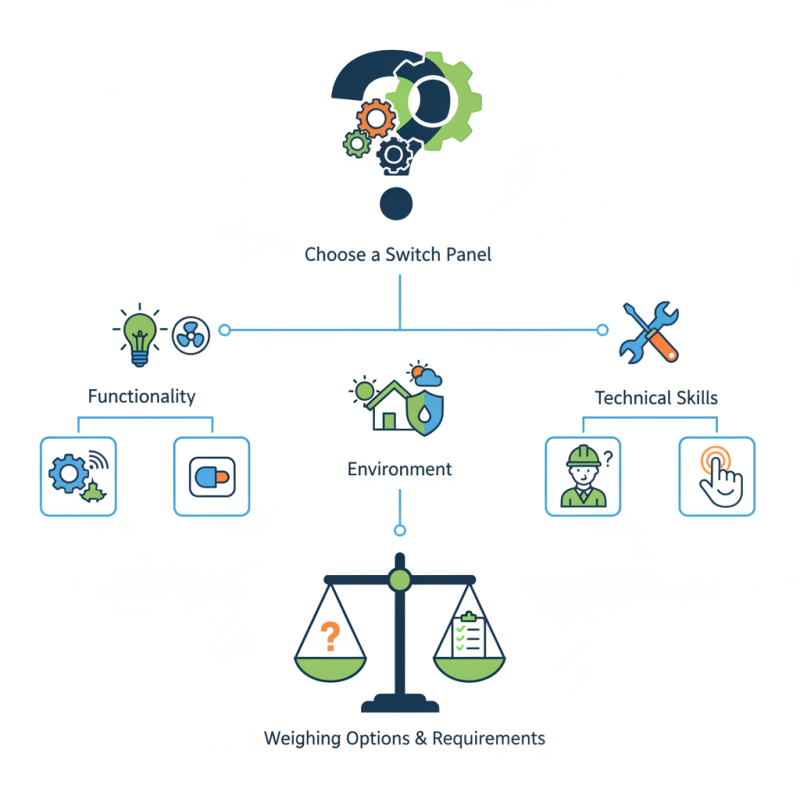
A switch panel serves various functions. It can control lights, fans, or other devices. Each type has its features and capabilities. Some panels offer smart technology for automation. Others are more traditional and straightforward. Your environment also plays a role in this decision. For instance, outdoor use requires weatherproof panels.
Consider your technical skills too. Some switch panels need professional installation. Others can easily be set up by anyone. Reflect on your DIY abilities and comfort level. Overall, making the right choice involves weighing options and understanding your requirements.
Understanding the Different Types of Switch Panels Available
When selecting a switch panel, it's vital to understand the various types available. Common types include toggle switches, push-button switches, and rotary switches. Each type has unique features and applications. A report from the International Electrotechnical Commission shows a significant rise in demand for user-friendly switch panels, driven by both residential and commercial needs.
Toggle switches are intuitive and durable. They offer a clear on/off position.
Push-button switches, often used in modern designs, can be more compact. These allow for multi-functional controls, enhancing space efficiency.
Rotary switches provide versatility, especially in lighting controls, allowing users to adjust brightness smoothly. However, their complex installation might deter some users.
A study by the Electrical Contractors Association highlights trends indicating increased preference for smart switch panels. These panels integrate with home automation systems. While they come with advanced features, some users find them challenging to install and configure.
Choosing the right switch panel requires understanding these options and their implications for ease of use and functionality.
Evaluating Your Power Requirements and Usage Scenarios
When choosing a switch panel, evaluating your power requirements is essential. It’s crucial to know how much power your devices will need. According to industry reports, over 70% of users face issues due to insufficient power ratings. Many don’t consider the cumulative load of all connected devices, leading to overloads. Therefore, calculate the total wattage of your equipment to avoid potential failures.
Consider the usage scenarios for your switch panel. Different environments impose varying demands. For a home workspace, you might need fewer functions. However, a workshop may require a multi-functional approach. Research shows that nearly 60% of users underestimate the versatility needed in more dynamic settings. A flexible panel can support various tools and devices, improving efficiency.
Think about the future, too. Make sure you account for growth. As your needs evolve, you may want to add more devices. Many users have realized their initial choice failed to adapt to changing power needs. A proper understanding of both current and anticipated usage can guide your selection process. Power management strategies can directly influence performance and safety. Don’t overlook this essential aspect when making your decision.
Assessing Compatibility with Existing Electrical Systems
When selecting a switch panel, assessing compatibility with existing electrical systems is crucial. Your current wiring and devices should seamlessly work with the new panel. Start by checking the voltage and amperage requirements. Ensure the switch panel matches the specifications. Mismatches can lead to malfunctions or hazards.
Tip: Use a multimeter to verify the voltage of your system. This tool can help you avoid costly mistakes.
Consider the type of devices you’ll control with the panel. Dimmers, timers, and smart switches may have unique requirements. Review their compatibility carefully. Not all devices will function well with every switch panel.
Tip: Research online forums or community groups for advice on specific combinations. Shared experiences can highlight potential pitfalls.
Pay attention to the physical layout of your space. Some switch panels require more room than others. Assess the size and location of existing installations. This can impact your choice.
Tip: Consider professional help if you’re uncertain. Experts can ensure a safe and effective installation.
Considering Additional Features and Functionalities
When selecting a switch panel, additional features and functionalities can significantly impact your experience. Look for panels with customizable buttons. Customization allows for a layout tailored to your specific needs. Consider the importance of backlighting too. It can be especially helpful in low-light environments, making it easier to identify which switch to use.
Durability is another critical factor. Some panels are designed to withstand harsh conditions, while others may not. If you're in a rugged environment, opt for materials that resist moisture and shock. Wireless capabilities can also add a level of convenience. They enable remote access and controlling functions from afar, which can simplify various tasks.
Lastly, think about ease of installation. Some switch panels require extensive setup, while others can be installed quickly. A simpler installation process can save time and effort. Reflect on what functions are truly necessary for your setup. Sometimes, less is more, but the right features can enhance usability. Your choice should not only meet immediate demands but also anticipate future needs.
Budgeting and Selecting the Right Price Point for Your Panel
When selecting the right switch panel for your needs, budgeting plays a crucial role. Industry reports indicate that nearly 45% of buyers prioritize affordability over features. It’s essential to define your budget early. A clear budget helps narrow down options and prevents impulse purchases. Remember, the cost should align with the panel's functionality and your specific requirements.
Research shows that the average price of a high-quality switch panel ranges from $50 to $150, depending on complexity. Basic models may seem appealing at lower prices but could lack essential features. According to professionals, investing in a mid-range product often results in better durability and usability. A $100 panel can offer advanced controls and safety features that cheaper models may omit. Therefore, spending slightly more can deliver a substantial return on investment.
Be flexible with your expectations. Sometimes, the best value is not the most expensive or the cheapest. Pay attention to user reviews and expert analyses. They provide insights into real-world performance. A well-researched selection, informed by budget considerations, can significantly enhance satisfaction with your purchase. Prioritize long-term usability, and you may discover that patience pays off in the end.
 +49 (0) 3722 59863-0
 sale@acutekcnc.com