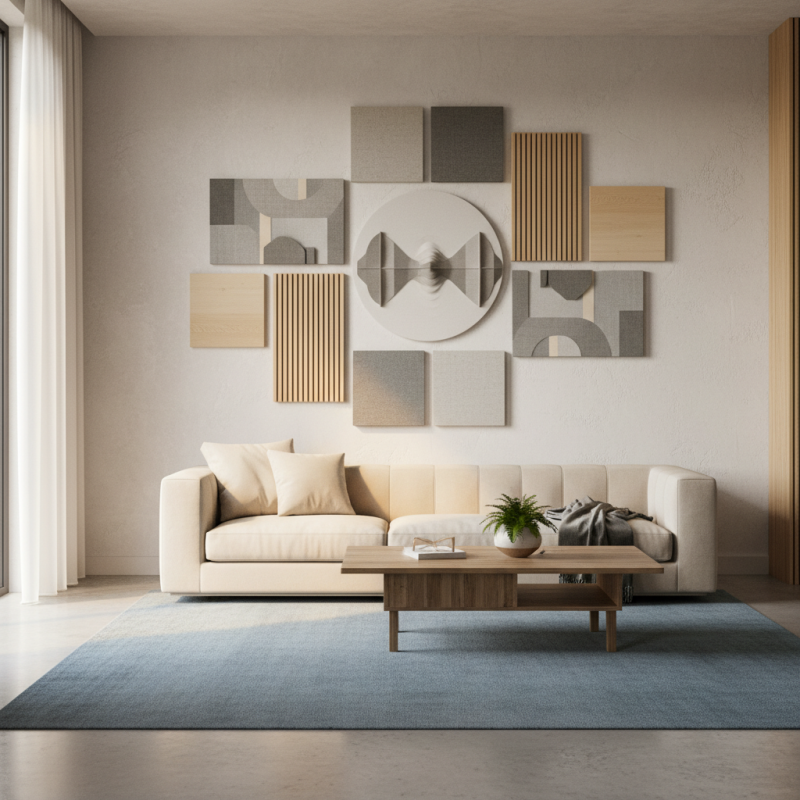
How to Choose the Best Acoustic Panel for Your Home?
Choosing the right Acoustic Panel for your home is crucial. Sound quality plays a vital role in our daily lives. With the variety of options available, the selection process can be overwhelming.
Understanding the purpose of Acoustic Panels is essential. They help reduce noise and enhance sound quality in any space. Consider the size and layout of your room to make an informed decision. Different materials and designs can affect both aesthetics and functionality.
Take time to research various brands and read reviews. Expert opinions can guide you toward the most effective solutions. Reflect on your personal needs and preferences. The perfect Acoustic Panel blends form and function while meeting your unique requirements.
Understanding the Basics of Acoustic Panels and Their Functionality
Acoustic panels play a crucial role in sound management within your home. They absorb sound waves, reducing echo and background noise. These panels can significantly enhance the audio quality in a room. You can often find them in studios, home theaters, and even busy living areas.
Understanding how these panels work is essential. They consist of porous materials designed to trap sound energy. When sound waves hit the surface, they are converted into a small amount of heat, effectively reducing the energy of the sound. Not all acoustic panels are created equal. Some are better suited for high frequencies, while others tackle lower frequencies. Consider the specific acoustical needs of your space.
It's important to recognize common mistakes when selecting panels. Many homeowners underestimate the size needed for effective sound absorption. Larger panels cover more area, allowing for better overall performance. Testing different placements also plays a vital role. Placing panels on walls or ceilings can result in distinct differences. Listen and adjust until you find the best arrangement for your environment.
How to Choose the Best Acoustic Panel for Your Home? - Understanding the Basics of Acoustic Panels and Their Functionality
| Feature | Description | Benefits | Best Use Cases |
| Material | Foam, Fabric, Wood, Polyester | Different materials absorb sound in unique ways, enhancing acoustic quality. | Home studios, theaters, music rooms |
| Thickness | 1 inch to 4 inches | Thicker panels provide better sound absorption, especially for lower frequencies. | Recording studios, offices |
| Size | Varies from small tiles to large panels | Larger panels cover more area and can improve sound absorption more effectively. | Open spaces, large rooms |
| Design | Various colors and patterns available | Aesthetic appeal can enhance decor while providing acoustic benefits. | Living rooms, offices |
| Installation | Wall-mounted, ceiling-mounted, freestanding | Easy installation methods can accommodate any space. | Versatile use in various settings |
Types of Acoustic Panels: Materials and Styles Explained
Acoustic panels come in various materials and styles, each offering unique benefits for sound absorption. Foam panels are lightweight and popular. They come in various colors and can blend into any room. They are effective for reducing echo in smaller spaces.
Fabric-wrapped panels provide a more sophisticated look. They can be custom-made with different fabric choices. This allows for personal expression while improving sound quality. Wood panels are another stylish option. They not only absorb sound but also add warmth to a room. They are often used in studios and home theaters.
When choosing acoustic panels, consider both aesthetics and functionality. Test how the materials feel and how they look in your space. Reflect on the type of sounds you want to control. Sometimes, fabric may not suit a room's design scheme. Always check how each panel fits within your budget. Balancing quality and cost can be challenging.
Assessing Your Room's Acoustic Needs and Challenges
When choosing the best acoustic panel for your home, understanding your room's acoustic needs is crucial. Rooms with hardwood floors and high ceilings often face excessive echo. According to the Acoustical Society of America, untreated spaces can increase sound reflections by 50%. Recognizing these challenges will guide you in selecting the right panel.
Tip: Assess the size of your room and its primary function. A recording studio may require more absorption than a home theater. For a normal living space, a balanced approach works well. Choose panels that match your decor while serving their purpose effectively.
Consider the materials used in your panels. Foam panels are lightweight but can trap heat. Fabric-wrapped panels offer better sound absorption and are more visually appealing. Research shows that soft materials can improve sound quality by up to 30%. Be mindful of panel placement. Strategic positioning is necessary for maximum effectiveness.
Tip: Use a mix of panel sizes for better coverage. Larger panels work well in corners. Smaller panels can treat specific areas. Reflect on your needs and adapt the space as needed. The journey to better acoustics is ongoing and might require adjustment over time.
Acoustic Panel Effectiveness by Frequency Range
This chart illustrates the sound absorption coefficients of acoustic panels across different frequency ranges. As shown, high-frequency sound absorption is the most effective, emphasizing the importance of selecting panels based on your specific acoustic needs.
Key Factors to Consider When Choosing Acoustic Panels
When choosing acoustic panels for your home, consider several key factors. The first is the material. Panels made from foam often provide decent sound absorption, while wood can enhance aesthetics and absorption. Data shows panels with higher density materials outperform others in noise reduction. This is critical for creating a peaceful environment.
Another essential factor is the panel thickness. Thicker panels better absorb lower frequencies, which are often troublesome in home theaters. For example, a 2-inch thick panel can absorb more sound energy than a 1-inch one. Room size also plays a role; larger spaces may require more panels for effectiveness.
Tips: Ensure proper placement of your panels. For maximum impact, position them at reflection points. This can significantly reduce echo. Experiment with different arrangements to see what works best in your space. Additionally, consider testing different designs, as aesthetics play a role in functionality and can influence the panel's overall effectiveness.
Balancing style with sound absorption is an art that can be refined over time.
Installation Tips for Maximum Soundproofing Effectiveness
When it comes to soundproofing your home, installing acoustic panels correctly is essential for optimal effectiveness. According to a survey by the Acoustical Society of America, the right placement of panels can enhance sound absorption by up to 30%. This highlights the importance of strategic installation to significantly improve acoustics.
Start by identifying sound reflection points. You can do this by using the mirror technique. Sit in your listening position and have someone move a mirror along the wall. Wherever you see the speakers in the mirror, that's where a panel should go. It’s crucial to treat these areas to minimize unwanted echoes. Consider using panels with varying thicknesses; thicker panels can handle lower frequencies better.
Another tip is to avoid cluttered spaces. While it might be tempting to fill up every corner, empty spaces allow sound to diffuse. Overloading a room with furniture can actually worsen acoustics. The goal is to create a balanced environment where sound can travel freely. Remember, achieving perfect soundproofing may require trial and error. Don’t hesitate to move panels around and observe the results.
 +49 (0) 3722 59863-0
 sale@acutekcnc.com