How to Choose the Best 3D Printing Machines for Your Needs?
The market for 3D printing machines has seen exponential growth in recent years. According to a report by SmarTech Analysis, the global 3D printing market is expected to reach $34.8 billion by 2024. This remarkable rise emphasizes the importance of selecting the right 3D printing machines that align with specific needs and applications.
Experts like Dr. Lisa Harrington, a renowned figure in additive manufacturing, assert, “Choosing the right 3D printing machine can define the success of your project.” With countless options available, decision-makers face challenges. Factors such as materials, speed, and purpose heavily influence the selection process. A machine that works for prototyping might not suit production needs.
This complexity suggests a need for careful evaluation. It may be tempting to choose based solely on features, yet one should consider budget constraints and long-term goals. Not all 3D printing machines meet common standards, which can lead to unforeseen issues. The journey to find the ideal machine involves reflection and understanding, ensuring a smarter investment in the future.

Understanding Different Types of 3D Printing Technologies and Their Applications
When choosing the best 3D printing machines, knowing the different printing technologies is essential. Fused deposition modeling (FDM) is popular for hobbyists. It uses thermoplastic filaments that melt and cool to create objects. This method is straightforward and cost-effective, making it ideal for beginners.
Stereolithography (SLA) represents another technology. It relies on a light source to cure resin layer by layer. SLA offers high precision and smooth finishes. However, the materials can be more expensive. These printers are suitable for intricate designs, like jewelry or dental models.
**Tip:** Assess your project needs before choosing. Think about the required detail level and material properties. Beware that the initial cost might not reflect long-term value.
Binder jetting allows for creating complex shapes with powdered materials. It's versatile and can produce larger objects. However, the final product may require more finishing. Evaluate if you have the resources to complete post-processing tasks.
**Tip:** Take your time in selecting a technology. Consider your skills and the complexity of your projects. Understanding each method can lead to better choices. Reflect on past projects. What worked? What didn’t?
3D Printing Technologies and Their Applications
Evaluating Print Quality: Key Metrics and Industry Standards to Consider
When choosing a 3D printer, print quality is crucial. Key metrics to consider include
layer resolution, print speed, and
material compatibility. According to industry reports,
layer heights can range from 20 to 300 microns. A lower height typically means better
detail, but slower printing. For some projects, such precision may not be necessary. It’s essential to balance
quality with practicality.
Print speed also affects overall output. Many machines offer speeds from 50 to 150 mm/s.
However, faster speeds can compromise precision. Evaluating the intended use will inform the acceptable trade-offs.
Materials also play a significant role. Some printers excel with certain filaments and struggle with others.
Understanding the properties of materials will help in selecting the right machine.
Tips: Check sample prints before purchasing.
Some manufacturers provide samples of their printers' capabilities. Always read reviews from other users. Their insights can reveal
hidden issues. Lastly, don’t overlook the calibration process. A well-calibrated printer can significantly enhance
print quality.
Assessing Build Volume and Material Compatibility for Your Projects
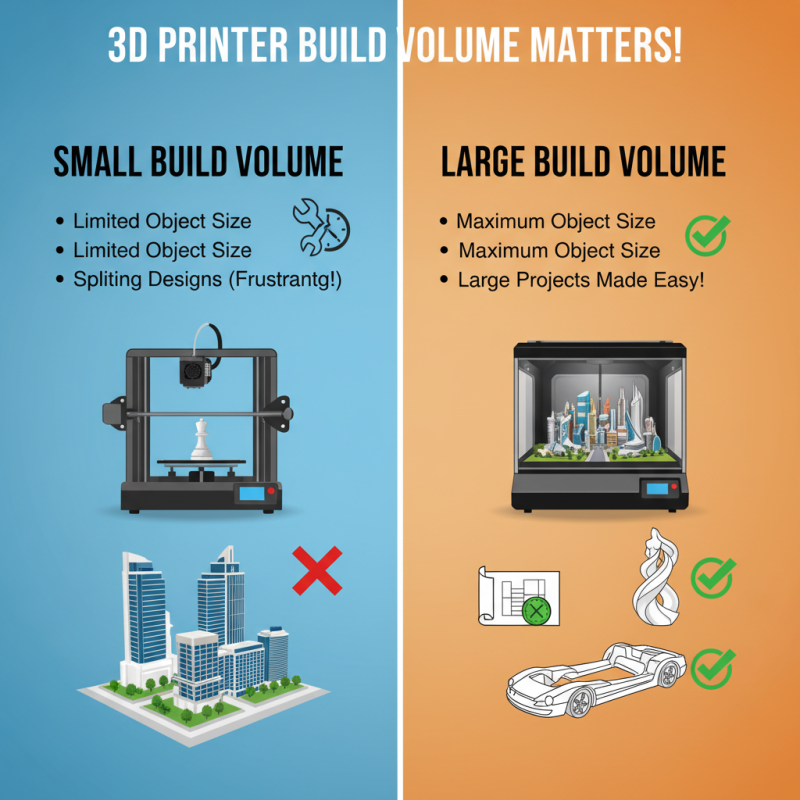
When choosing a 3D printing machine, build volume is crucial. This defines the maximum size of your printed objects. If you plan large projects, a larger build volume is essential. Small machines can be limiting. They may lead to compromises in design. Imagine needing to split a model into several parts. It can be frustrating and time-consuming.
Material compatibility is another vital aspect to consider. Different machines work with various materials, such as PLA, ABS, or resin. Each material has unique properties. For example, ABS is durable but requires a heated bed. On the other hand, PLA is user-friendly but less heat-resistant. Knowing what you intend to print helps narrow your choices. It’s easy to overlook this detail. Many get distracted by flashy features without assessing material needs.
Moreover, reflect on the future needs of your projects. You might start with small models but could evolve into more complex designs. That could require materials with specialized properties. Planning for growth in your 3D printing journey is beneficial. Don’t be too quick to settle on a choice. Take your time to assess your specific needs.
Analyzing Costs: Upfront, Maintenance, and Material Expenses in 3D Printing
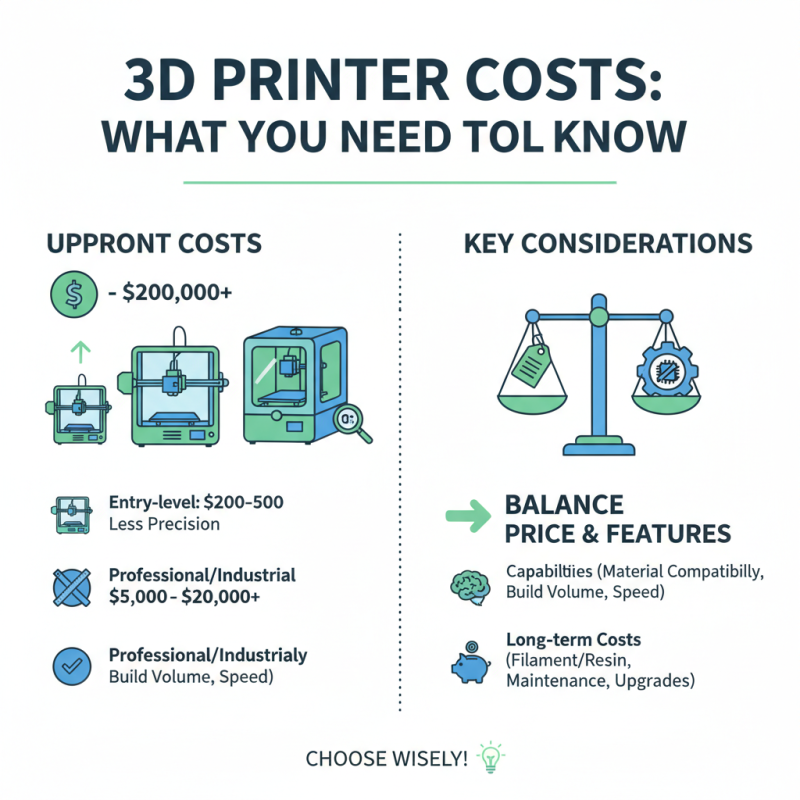
When choosing a 3D printer, understanding associated costs is crucial. Upfront costs can range from $200 to over $20,000, depending on the machine's capabilities. Lower-end printers are often more accessible but may lack precision. It's essential to balance price with the features you need.
Maintenance expenses should not be overlooked. Regular upkeep can add 15% to 30% to your annual budget. Consumable parts, such as nozzles and belts, will also require replacement. This can lead to unplanned expenses if you're not careful. Also, consider the cost of software updates and subscriptions, which can accumulate over time.
Material expenses vary widely, too. Filament costs can be as low as $20 per kilogram for basic types but jump to over $200 for specialized materials. A single industrial-grade print might require several kilograms, dramatically increasing costs. Analyze your project's material needs carefully to avoid surprises.
Identifying Reliable Brands and Customer Support in the 3D Printing Market
Selecting a reliable 3D printing machine involves more than just specifications. You need to consider the brand's reputation. Research the companies that manufacture these devices. Look for brands known for durability and innovation. Customer reviews play a crucial role. Pay attention to feedback regarding their printing performance and longevity.
Customer support is equally important. A great machine can fail at times. You need assistance quickly. Check how brands manage customer inquiries. Do they respond promptly? Is support accessible, even during off-hours? These factors can save you frustration in the long run. A company with solid support can turn a disappointing experience into a positive one.
Sometimes, even reputable brands can disappoint. Machines might have design flaws or software issues. This is where community forums come in. They can offer insights that you won't find in official documentation. Use them to gauge how other users handle problems. Learning from their experiences can help you bond with your device better. It’s all about finding the right fit for your specific needs.
How to Choose the Best 3D Printing Machines for Your Needs?
| Feature |
Value/Description |
| Build Volume |
200 x 200 x 200 mm |
| Layer Resolution |
50 - 300 microns |
| Print Speed |
60 mm/s |
| Supported Filaments |
PLA, ABS, PETG, TPU |
| Connectivity Options |
USB, SD Card, Wi-Fi |
| Software Compatibility |
Windows, macOS, Linux |
| Support and Warranty |
1 year warranty with robust customer support |
| Price Range |
$200 - $1000 |
 +49 (0) 3722 59863-0
 sale@acutekcnc.com