How to Choose the Right Aluminium Profile Extrusion for Your Needs?
Choosing the right Aluminium Profile Extrusion can significantly impact your project’s success. As industry expert John Smith states, "The right extrusion can make all the difference in design and functionality." In today’s market, versatility and precision are key.
Selecting an Aluminium Profile Extrusion involves understanding your specific requirements. Factors like weight, strength, and corrosion resistance are essential. Each project may demand different attributes, complicating the selection process. Many overlook how crucial these elements can be. They might choose a profile based on appearance alone and later face compatibility issues.
Navigating the options can be daunting. A wide range of profiles exists, catering to various industries. With so many choices, it’s easy to feel overwhelmed. The implications of making a poor selection are significant. Buyers must reflect on their long-term needs during the decision-making process. Thus, understanding both your requirements and the materials available is vital for optimal outcomes.
Understanding the Basics of Aluminium Profile Extrusion
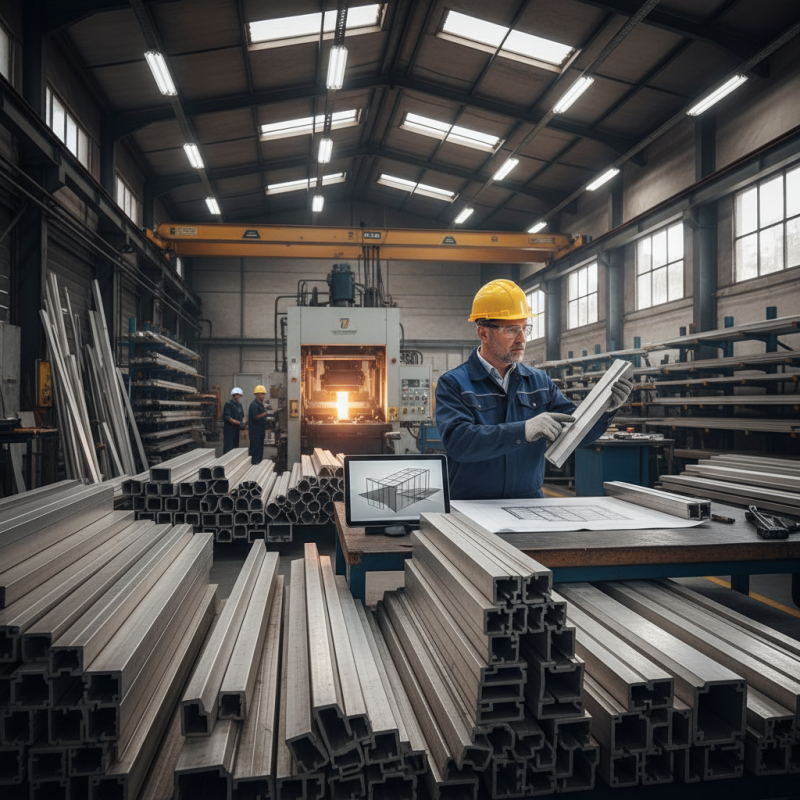
Aluminium profile extrusion is a crucial process in manufacturing. It involves shaping aluminium by forcing it through a die. Understanding this process is key to selecting the right profiles. According to a 2021 industry report, the global aluminium extrusion market was valued at approximately $41.7 billion. This figure underscores the material's importance across various sectors.
The extrusion process offers versatility. Custom profiles can be tailored for specific applications. Industries like automotive and aerospace utilize these tailored solutions for lightweight and durable components. A research study indicated that extruded aluminium can achieve a weight reduction of up to 60% compared to steel. However, not all profiles fit every need. Misjudgments in selection can lead to increased costs and compromised structural integrity.
Quality control in extrusion is vital. The presence of defects, like surface imperfections and inconsistent dimensions, can impact performance. A survey revealed that over 15% of manufacturers faced challenges in maintaining consistent quality in extruded products. It’s essential to address these potential pitfalls when choosing an aluminium profile for your project. Each application demands unique solutions, and understanding these basics sets the foundation for making informed decisions.
Identifying Your Specific Needs and Applications
Identifying your specific needs and applications is vital when choosing the right aluminium profile extrusion. Different industries have diverse requirements, such as structural strength, weight, and thermal properties. According to the Aluminium Association, nearly 70% of extrusions are used in construction, automotive, and aerospace sectors. Each application demands unique specifications. For example, architectural elements often require specific finishes and load-bearing capacities.
Understanding the intended use of the aluminium profile is essential. Manufacturers offer various alloys, such as 6061 and 6063, each with distinct mechanical properties. A report by the International Aluminium Institute highlights that the choice of alloy impacts strength and corrosion resistance.
Choosing the wrong alloy can lead to product failure. In aerospace, where safety is paramount, even minor errors can have grave consequences.
Design considerations also play a significant role. An extrusion's shape can affect performance factors like thermal conductivity and aesthetic appeal. Some profiles are not suitable for high-stress applications due to their geometry. The design should align with load requirements and environmental factors.
Reflection on these elements can prevent costly mistakes and enhance project outcomes. It's imperative to assess both immediate needs and potential future applications.
Comparing Different Types of Aluminium Profiles
When selecting an aluminium profile for your project, consider the various types available. Each type serves different purposes, affecting your choice. For instance, structural profiles are designed for load-bearing applications. They provide stability and strength in construction. Meanwhile, decorative aluminium profiles focus on appearance. They enhance aesthetics in architectural designs.
Extruded aluminium profiles vary in shape and function. T-slot profiles are versatile. They allow easy assembly and reconfiguration. On the other hand, angular profiles provide a rigid structure for frameworks. Their right angles enhance stability for heavier loads.
It’s important to reflect on your specific application. Are you prioritizing strength over style? Or do you need a balance of both? Sometimes, users overlook the necessity of thermal break profiles. Such profiles help in energy efficiency but aren't always recognized. Evaluating these options ensures you make informed decisions.
How to Choose the Right Aluminium Profile Extrusion for Your Needs? - Comparing Different Types of Aluminium Profiles
| Profile Type | Application | Strength | Weight | Cost |
| Standard Profile | General construction | Moderate | Lightweight | Low |
| Heavy-Duty Profile | Industrial use | High | Moderate | Medium |
| Thermal Break Profile | Energy-efficient windows | Moderate | Lightweight | High |
| Decorative Profile | Interior design | Low | Very lightweight | Variable |
| Custom Profile | Specialized applications | Variable | Customizable | Usually High |
Evaluating Material Properties and Finishes
When selecting the right aluminium profile extrusion, understanding material properties is crucial. Aluminium is lightweight, yet strong. It offers excellent corrosion resistance. Consider the alloy type; each has different qualities. Some are more malleable, while others are rigid. This variability influences the application. For instance, softer alloys are ideal for intricate designs. Rigid options are better for heavy loads.
Finishes also play a significant role in performance. Anodizing enhances durability. It provides an aesthetically pleasing surface. Powder coating adds color while further protecting the material. However, these finishes can alter thermal conductivity. Reflect on how this might affect your project. A shiny surface may be visually striking, but practical use is essential.
Don't overlook the environmental impact of your choices. Consider recyclable options and their energy efficiency. While many extrusions are recyclable, not all finishes are. Researching these aspects can lead to a more sustainable selection. Tailor your aluminium profile extrusion choices to both project needs and ethical considerations. Balancing these factors can be challenging but rewarding.
Material Properties of Aluminium Profiles
Choosing the Right Supplier and Manufacturing Process
Choosing the right supplier for aluminium profile extrusion is critical. A reliable supplier should have a clear track record of delivering high-quality products. According to industry data, around 70% of materials used in manufacturing come from trusted suppliers. Quality assurance is not an option; it is a necessity. Look for suppliers with certifications such as ISO 9001 to ensure strict quality management processes.
The manufacturing process to consider is extrusion itself. The extrusion process affects both the strength and durability of the final product. A recent report stated that improper handling during extrusion can lead to imperfections in profiles, which may compromise structural integrity. Understanding the supplier's production techniques can help evaluate the longevity of your aluminium profiles.
Communication with suppliers is vital. Clear specifications, including dimensional tolerances and alloy types, must be conveyed. Lack of clarity often results in misunderstandings, which can delay projects. Be prepared to ask questions about their production capabilities. Suppliers who are open to dialogue tend to be more reliable. Choosing the right supplier and understanding the manufacturing process is essential for achieving optimal results in aluminium extrusion.
 +49 (0) 3722 59863-0
 sale@acutekcnc.com